


When
Monday 3rd May to Thursday 13th May 2027
Where
Lake Nakuru, Samburu, Lake Naivasha, Africa
Group size
10 Maximum
For this trip to Africa in May 2027 I will be teaming up with Paul McDougall, to take a group of guests to the magnificent Samburu region of Kenya. Paul has many years of experience in leading trips to this part of Africa, and I am really excited to be working with him on this tour.
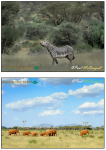
You will get the opportunity to photograph Elephants in Samburu National Reserve. Approximately 900 elephants are found in the reserve. The reserve covers an area of 165 Km² and is located around 345Km from Nairobi.
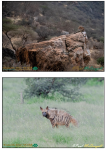
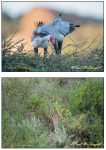
Photograph Gerenuk and other rare northern Kenyan specialist species such as the Grevy Zebra, Somali Ostrich, Reticulated Giraffe, and the Beisa Oryx.
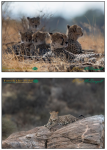
Photograph Lion, Leopard, Cheetah and Wild Dog. All the main predator species are found in Samburu.
Photograph the Taita Falcon and other rare birds. Birdlife is abundant in Samburu National Reserve with over 450 species recorded.
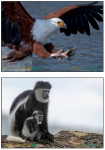
Also we will visit Lake Nakuru and Lake Naivasha, to photograph the abundant bird like such as African Fish Eagles, various Kingfisher’s and much much more.
Background
Lake Nakuru
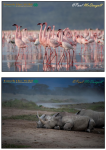
Lake Nakuru National Park (188 km², 73mi²), created in 1961 around Lake Nakuru, near
Nakuru Town. It is best known for its thousands of flamingos gathering along the shores.
Although the population had declined and disappeared it is now starting to recover. The
edge of the shallow lake is often covered in a mass of pink. The number of flamingos on the
lake varies with water and food conditions and the best vantage point is from Baboon Cliff.
Also of interest is an area of 188 km around the lake fenced off as a sanctuary to protect
Rothschild giraffes, Black rhinos and White rhinos. The park now has more than 25 black
rhinoceros, one of the largest concentrations in the country, plus around 70 white rhinos.
There are also a number of Rothschild’s giraffe, again translocated for safety from western
Kenya beginning in 1977.
Waterbuck are very common and both the Kenyan species are found here. Among the
predators are lion and leopard, the latter being seen much more frequently in recent times,
in fact Lake Nakuru has one of the largest densities of leopards in the whole of Kenya.
The park is also very good for hyenas, they can sometimes be seen hunting flamingos early
in the morning along the lake shore. As well as flamingos, there are lots of other bird species
that inhabit the lake and the area surrounding it, such as African fish eagle, goliath heron,
hamerkop, pied kingfisher and Verreaux eagle
Samburu National Reserve
Located on the edge of Kenya’s vast, hot and arid northern region, It is a photographers
dream with Samburu’s rugged scenery, endless skies and vast panoramas creating a
powerful and unique backdrop for some of Africa’s rarest game and several hundred bird
species.
Samburu National Reserve is one of the 56 protected areas in Kenya. It is famous North of
the equator because of the richness of flora and fauna found there; it can be reached
through Nairobi-Isiolo-Marsabit road and Maralal-Wamba-Isiolo road. Lying on the flood
plains and bottom land of Ewaso Ngiro drainage system in the Great Rift Valley. It rises to an
altitude of 2785 ft above sea level and covers an area of 390 km2.Samburu National Reserve
was established in 1948 as part of the enormous Marsabit National Reserve under the
national park ordinance.
The reserve is part of the ancestral territory of the colourful Samburu people, close relatives
of the Masai, and is home to a number of species rarely found elsewhere in any number.
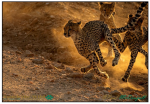
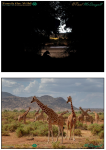
Species to be seen include, Grevy’s zebra, Reticulated giraffe, Greater and Lesser Kudu,
Beisa oryx, and the long-necked gerenuk, a graceful antelope that spends much of its time
on its hind legs seeking out succulent leaves in the withered scrub that dots this harsh
terrain.
Samburu’s dramatic scenery is scorched for most of the year by the relentless equatorial
sun, but the wide Ewaso Ngiro River offers some relief. This river rises some hundreds of
kms to the west in the foothills of the Aberdares and eventually vanishes beyond Samburu
into the recesses of the Lorian Swamp, but is at its wide and dramatic best in the reserve,
where you can see large numbers of crocodile on sandbanks at almost every turn. There are
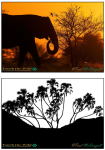
also many hippos, and the banks are lined with giant acacias, figs and doum palms, which
provide shade and a vital food source to the wildlife that comes to the water. Herds of
elephant roam the gaunt hills that punctuate the scrubland, some appear a vibrant red
colour after rolling and bathing in the mud and dust.
Lake Naivasha
Lake Naivasha is a beautiful freshwater lake, fringed by thick papyrus. The lake is almost
13kms across, but its waters are shallow with an average depth of five metres. Lake area
varies greatly according to rainfall, with an average range between 114 and 991 sq kms.
At the beginning of the 20th Century, Naivasha completely dried up and effectively
disappeared. The resulting open land was farmed, until heavy rains a few years later caused
the lake to return to existence, swallowing up the newly established estates. Afternoon
wind and storms can cause the Lake to become suddenly rough and produce high waves.
For this reason, the local Maasai christened the lake Nai’posha meaning ”rough water”,
which the British later misspelt as Naivasha. The lake and its surrounds are rich in natural
bounty, and the fertile soils and water supply have made this one of Kenya’s prime
agricultural regions.
Much of the lake is surrounded by forests of the yellow barked Acacia Xanthophlea, known
as the yellow fever tree. These forests abound with bird life, and Naivasha is known as a
world class birding destination. Highlights include the African Fish Eagle, which you can
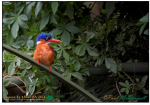
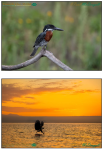
sometimes see swooping to catch fish, various kingfisher species including Pied and
Malachite and various heron species including Goliath and Purple. The waters of the lake
draw a great range of wildlife to these shores. Giraffes wander among the acacia, Buffalo
wallow in the swamps and Colobus monkeys call from the treetops while the Lakes large
hippo population sleep the day out in the shallows. The lucky observer can sometimes see
Otter swimming through the reeds.
Itinerary
DAY 1
Pick up from Airport and transfer to Airport Hotel If clients arrive the day before there can
be an option to do Nairobi National Park on this day (additional cost).
Overnight at Weston Hotel
Day 2
After breakfast we will pack and drive North to Samburu. As we get further North, we will
notice a big change in the temperature and the landscape, as we drive past Isiolo we will
start to see domesticated camels and possibly wild elephants and other animals on the side
of the road. We will have lunch enroute. W acclimatising to the increased temperatures of e
will arrive in the afternoon at Samburu. We will do a short drive on our way to the lodge and
will hopefully pick up some of the more common birds and the red elephants.
Dinner and overnight at Sopa Lodge
Day 3 – 7
The landscape of Samburu is breathtaking with semi desert and a dry arid landscape that
turns green for a short period of time in the rainy season. The Ewaso Ng’iro River separates
Samburu from the Buffalo Springs side of the reserve. It is lined with unique Doum Palm
trees. The soil is red and dusty and the possibility of capturing red elephants in a
breathtaking landscape is one of the iconic Samburu shots we will try to achieve.
Samburu is home to many unique species including:
Somali Ostrich, Gerenuk, Reticulated Giraffe, Grevy’s Zebra and Oryx.
It has abundant birdlife including:
Red and Yellow Barbet, Pygmy Falcon, Golden Breasted Starling, White Throated Bee-eater.
It has 4 of the big 5:
Buffalo, Elephant, Lion and is one of the best places in Kenya to see Leopard.
It also has good populations of cheetah and some of the more uncommon species such as
Striped Hyena, Wild Dog, Caracal and Bat Eared Fox.
Over the course of the 5 days we will take our time exploring the stunning landscape and
looking for the iconic and varied Samburu species.
The usual program will be up early for sunrise. Return to the lodge for breakfast. Then
straight out for another game drive. Return to the lodge for lunch. Then back out for an
afternoon game drive returning to the lodge at sunset. We will have multiple vehicles so can
be flexible with game drives and timings.
Our lodge is in the heart of the reserve on the banks of the Ewaso Ng’iro River and therefore
we are never far from the action and where we need to be to capture the best images
possible.
Dinner and overnight at Sopa Lodge.
DAY 8
After an early breakfast we will leave for our drive South to Lake Nakuru. We will aim to
arrive in the afternoon and will have lunch enroute. Upon entering the park we will focus on
the lake shore and look for flamingos and pelicans and capture images of these beautiful
birds. We will then take a drive around part of the lake looking for rhinos and buffalo on the
lake shore. We will then return to our lodge via the yellow fever forests searching for lions
and leopard.
Dinner and overnight will be at Sopa Lodge
Day 9
We will be up early and out for sunrise. We will try to capture images of the many birds that
use the lake shore dead trees to perch on. We will also look for interesting backlit images as
the sun rises. After the sun has risen, we will do a short game drive and then will return to
the lodge for breakfast.
We will drive South to Lake Naivasha aiming to arrive for a late lunch. After we have
checked in to Elsamere Conservation Centre we will attempt to photograph the resident
group of Colobus Monkeys. These monkeys are fed vegetable peelings and kitchen scraps,
and really good images can be captured at a relatively close distance. Late afternoon we will
take our first boat trip on Lake Naivasha. We will be searching for the 3 main kingfisher
species, The Pied Kingfisher, Giant Kingfisher and Malachite Kingfisher. We will also search
for other water birds – herons, cormorants, and storks. The highlight of the trip though is
the African Fish Eagle, and we will have a session with these incredible birds where they are
fed locally sourced fish and swoop down near to the boat to take them off the surface.
Dinner and Overnight at Elsamere Conservation Centre.
Day 10
After a morning boat trip we will return for breakfast. We will then pack the vehicles and get
ready for departure. There will be time available in the morning before departure to have
another session with the Colobus Monkeys if desired.
We will then depart Lake Naivasha and Return to Nairobi.
We will have a final trip meal and will share experiences and highlights of the trip.
Dinner and Overnight at Weston Hotel
Day 11 – Departure Day
We will organise Airport Transfers depending on flight times. Anyone departing in the
evening can leave their luggage in the hotel and optional excursions can be organised for
Nairobi National Park, Sheldrick Elephant Orphanage or the Giraffe Sanctuary (additional
cost).
End of Tour
The Price includes:
• 2 nights accommodation in Weston Hotel. Bed and Breakfast.
• 1 nights accommodation in Lake Nakuru Lodge. Lake Nakuru. Full Board
• 6 nights accommodation in Sopa Lodge. Samburu. Full Board
• 1 nights accommodation in Elsamere Conservation Centre. Lake Naivasha. Full
Board.
• 2 Boat Trips at Lake Naivasha as described
• Transport in 4×4 Landcruiser with pop up roof and large opening windows
• All park fees and government taxes.
• Services of a driver guide throughout.
• Services of photographic guide throughout.
• Airport Transfers.
• No single supplement
The price excludes.
• Any flights
• Tips and Gratuitees
• Any drinks other than water.
• Travel Insurance.
• Optional Excursions as described.
To help with budgeting the following are correct to the best of my knowledge:
Samburu Village Visit Samburu NR £50pp
Additional Boat Trip in Lake Naivasha for photography £50pp
Hells Gate NP Lake Naivasha £75pp
Nairobi NP £150pp
Nairobi City Tour £100pp
Camera Gear Needed:
Bridge with wide zoom range, DSLR or Mirrorless.
Wide Angle – Ideal for landscape and wide environmental portraits.
70-200 ideal for landscapes and environmental portraits.
100-400 ideal lens for most wildlife encounters
500-600+ ideal for birds and any wildlife that we need to view from a further distance due
to off road constraints.
A zoom lens is ideal for a safari if you don’t want to bring more than one body or constantly
change lenses.
(Please Note accommodation options detailed above are subject to availability and may be
changed).
What is included
2 nights accommodation in Weston Hotel. Bed and Breakfast.
• 1 nights accommodation in Lake Nakuru Lodge. Lake Nakuru. Full Board
• 6 nights accommodation in Sopa Lodge. Samburu. Full Board
• 1 nights accommodation in Elsamere Conservation Centre. Lake Naivasha. Full
Board.
• 2 Boat Trips at Lake Naivasha as described
• Transport in 4×4 Landcruiser with pop up roof and large opening windows
• All park fees and government taxes.
• Services of a driver guide throughout.
• Services of photographic guide throughout.
• Airport Transfers.
• No single supplement
Not Included
• Any flights
• Tips and Gratuitees
• Any drinks other than water.
• Travel Insurance.
• Optional Excursions as described.